
by MILAN HIBER
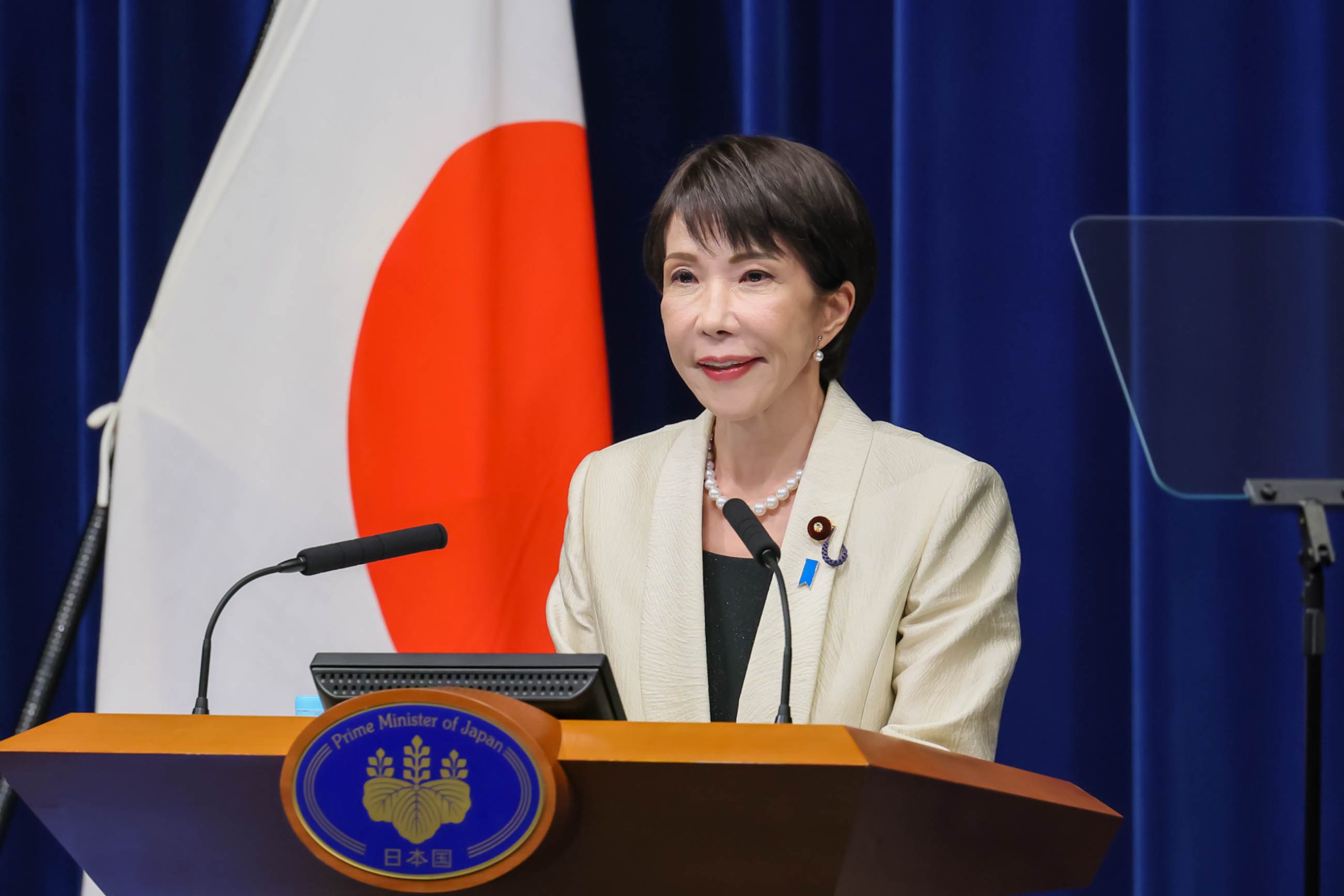
Saene Takaichi has been serving as Prime Minister of Japan since October 2025. These six months have shown roughly what we can expect from Japan’s foreign and security policy during Takaichi’s term. There haven’t been major shifts when compared to previous governments, but tendencies of militarization and debates about certain questions of security mean that it will be important to continue monitoring Japan in the following period, especially as Japan remains among the most important U.S. allies in the region.
Increased defense spending, development of long-range missiles, arms-export changes and rhetoric regarding Taiwan all point to a certain level of militarization. Here are some examples:
1. Defense Spending – Adaptation or Preparation?
Japan has increased its defense budget by 9.4% in 2026. Though Defense Minister Shinjiro Koizumo stated that “It does not change (Japan’s) path as a peace-loving nation”, this marked increase occurs in a context of increased militarization and possible reevaluation of Japan’s security identity under PM Takaichi.
The increase is part of a five-year plan to double the defense budget to 2% GDP, which would make Japan the third largest defense spender in the world. Under Takaichi’s leadership, the plan is being realized two years earlier than expected.
2. Long Range Missile Development – Watching over the Indo-Pacific
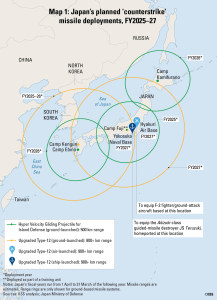
Japan has started developing long-range missiles as part of a ‘counter-attack’ strategy. Meant to discourage possible aggression from Beijing, these missiles are capable of hitting enemy bases in such a situation.
These are the first domestically developed long-range missiles in Japan, and will be deployed at the south-western island of Kyushu, facing the East China Sea and Korean peninsula.
3. Arms Export Changes – A Stimulus for the Defense Industry
Japan has traditionally been very restrictive on arms exportation. The export of weapons has been banned since the 1960’s and 1970’s, with certain exceptions form the 1980’s (such as allowing export to the U.S.). The ban was relaxed even further in 2011, allowing for exports for “peacebuilding and humanitarian missions”.
Now, over 50 years since the initial ban, the Japanese government is looking to relax the prohibitions even further. The government proposal would separate exports into ‘arms’ (weaponry, tanks, etc.) and ‘non-arms’ (such as armour), and allow the National Security Council to approve their sale. This would, in practice, eliminate the previous restrictions based on the purpose and usage of the arms (e.g. peacebuilding missions, rescue, minesweeping…), instead giving discretionary power to the government.
4. Article 9 of the Constitution – Debates over Self-Defense
Article 9 of the Constitution of Japan remains among the most controversial political and security questions in the country. This clause, which officially outlaws war and states that forces with war potential will never be maintained, has been among the main determinants of Japanese security policies since the adoption of the Constitution in 1946.
Previous attempts to reinterpret the Article were controversial most notably, Shinzo Abe’s cabinet succeeded at this in 2014, allowing a more general understanding of collective self-defence, though with much resistance from both the public and politicians alike.
Though an official attempt to reinterpret or change the Constitution has not been formally initiated, the change in public perception and the political context of increased militarization and defense spending might make such a move a realistic possibility, especially as the ruling LDP (Liberal Democratic Party) has recently mentioned the need for amending the Constitution, for the first time since its adoption.
5. Taiwan and the Indo-Pacific – Staying the Course or Taking a Stand
November 2025 saw a diplomatic crisis between China and Japan, caused by major disagreements over Taiwan. The Japanese prime minister implied that a potential use of force on Taiwan by Beijing would result in a response by Japan’s Self-Defense Force.
The comment was followed by responses from Chinese officials, including deleted threats by a consul, urging by the Chinese government not to visit Japan, military drills near the Yellow Sea and around Taiwan, economic measures against imports of Japanese goods, etc.
The heavy-handed response by China did not manage to discourage the Prime minister. Instead, PM Takaichi’s victory in the February snap elections only confirmed the stability in the course of Japan’s foreign policy, showing readiness to be a more active security actor in the region.
Milan Hiber is an MA student in Peace, Security and Development at the University of Belgrade, Faculty of Political Science, and RSKH intern at the Centre for International Security.
Cover image credit: 内閣広報室 / Cabinet Public Affairs Office/Wikimedia Commons