
by MILAN HIBER
The start of the New Year has been turbulent for the world. Three months in, there have already been signs of the liberal, rules-based international order cracking at the seams. The arrest of Venezuelan president Nicolás Maduro and the intervention in Iran are just the biggest examples. In such a chaotic international context, Europe is caught between trying to find its place as an independent actor with political, security and economic agency, while still attempting to salvage its relations with the U.S. Here are five challenges, risks and threats to look out for this year:
1. The War in Ukraine – No End in Sight
As the War in Ukraine crosses into its fifth year, its end is not yet in sight. The war has already significantly impacted the security dynamics of both Europe in general, and the EU in particular. Traditionally neutral countries (Sweden and Finland) have joined NATO, the European Union has shown both a remarkable unity from most of its members regarding support of Ukraine, though exceptions such as Hungary remain the biggest obstacle to a more unified and effective common foreign policy.
The threat of expansion into other European countries, and the spillover of the war into economic and energy security still prove among the most significant and discussed questions of European Security. The recent war in Iran is a significant security question, but it is not likely to overtake Ukraine as the primary security focus of Europe as of yet.
2. Security Independence – Reform NATO or Look for Alternatives?
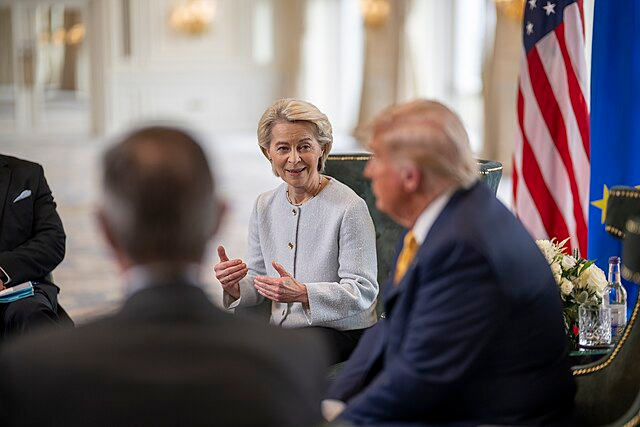
Traditional EU-US security relations have strained. U.S. president Trump’s insistence on higher military spending from European NATO members bore fruit, though his demand for control over Greenland destroyed much of the remaining good will from his European counterparts.
With the U.S. not being a reliable ally, Europe is at a crossroads – try to act within a weakened NATO, or look for alternative forms of security guarantees. The Readiness 2030 plan shows that it is actively trying to gain strategic agency, though the results are still far from clear.
The attacks on Iran further strained these relations and once again split the EU. While some members offered certain levels of support for the U.S.’ actions (e.g. France), others, such as Spain, completely resisted and opposed the actions. These cleavages within the EU could significantly impact its attempts at gaining security independence.
3. Migration – A Repeat of 2015 or Proof of European Consolidation?
Following from the previous point, as migration continues to be a challenge for the EU, the conflict in Iran could only exacerbate this challenge. The 2015 European “migration crisis” proved a strain on European unity, and a possible repeat of such a challenge could be especially significant in the current political context. On the other hand, new measures such as the proposed Annual Solidarity Pool and European Centre Against Migrant Smuggling could help in preventing a repeat of the crisis. The 2024 Pact on Migration and Asylum, as well as the following Annual Reports (see the 2025 report), provide a strong foundation for these measures. Such examples prove that the EU in 2025 might be able to overcome the challenges that might follow and prevent further internal conflicts.
4. The Rise of the Right – An Obstacle for Integration
The strengthening of right-wing and far-right parties in many European countries (such as the UK, France, Germany, Italy, Hungary, etc.), as well as their rising significance in the European Parliament, proves another challenge for Europe. This tendency is seen across all of Europe, including EU member states.
Seeing as many of these countries are either euro-sceptic or are at the very least against further integration, this poses a challenge for EU security independence and international agency, while significantly impacting the Green New Deal. Some of these right-wing parties are also “softer” on Russia and thus less likely to agree with the continued support for Ukraine, leading to a lack of cohesion in the EU Common Security and Foreign Policy.
The upcoming elections in Europe could significantly affect the political landscape of Europe, and impact further possibilities of integration and enlargement of the EU.
5. Becoming Competitive and Independent – Economic and Energy Insecurity
Europe’s significant economic partnership with the U.S. has been threatened during the past year. Tariff wars and major political misalignments have shaken the traditionally close partnership, and have made it necessary for Europe, and the EU in particular, to look for alternative solutions.
The 2024 Draghi report emphasized the need for the EU to increase competitiveness. Further, the EU is in the middle of an energy transition, hastened by Russia’s invasion of Ukraine and the EU’s agreement to phase out Russian gas, made even more difficult with the War in Iran’s effects on oil prices. These initiatives have proven challenging for the EU, and the international context hasn’t helped. However, these challenges also provide opportunities. The European Union could end up more economically competitive and with more energy independence, if it plays its cards right.
Milan Hiber is an MA student in Peace, Security and Development at the University of Belgrade, Faculty of Political Science, and RSKH intern at the Centre for International Security.
Photo credit: The White House/Wikimedia Commons