
by MILAN VARDA
Earlier in July, as a member of CIS Serious Games Lab, I had the pleasure of taking part in the Serious Games and World Politics Summer School, held in the historic Moise Palace in Cres, Croatia, thanks to generous help from our partners of the University of Rijeka. Bringing together students, researchers and practitioners interested in geopolitics, simulations and serious games, the summer school offered an opportunity to explore how games can be used not only for teaching, but also for thinking through complex contemporary geopolitical problems. The cohort coming from the University of Belgrade – Faculty of Political Science, the Ohio State University, IMSISS and beyond has left me thoroughly impressed. While I came as one of the facilitators, I left as a student fulfilled with novel experience.
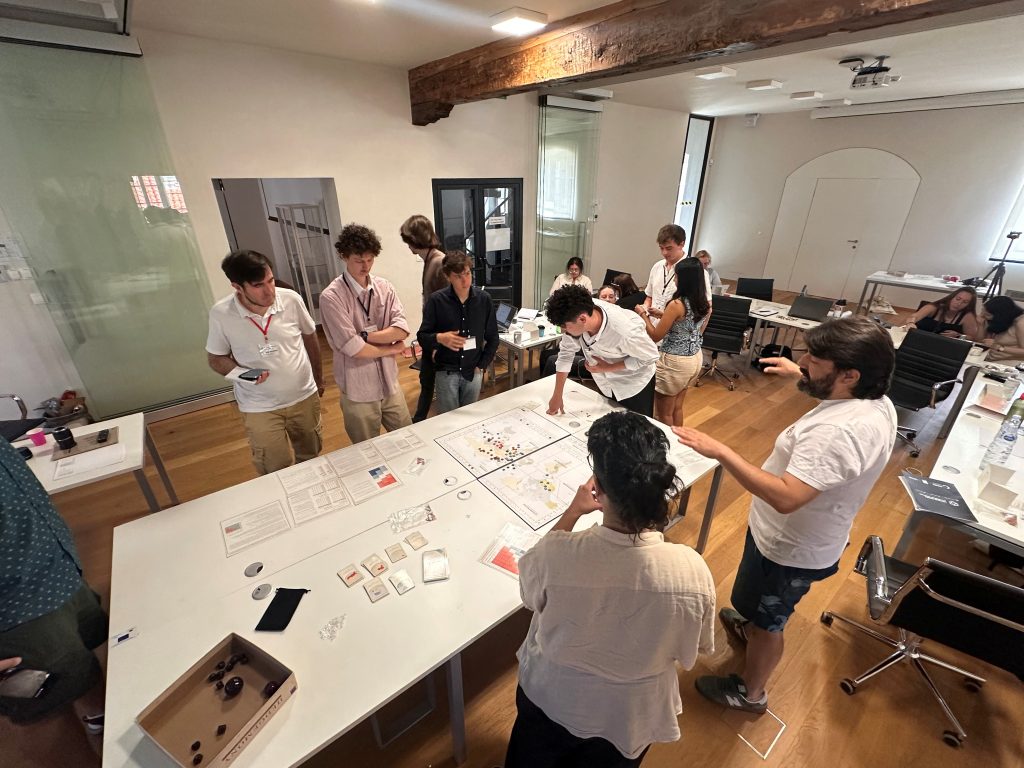
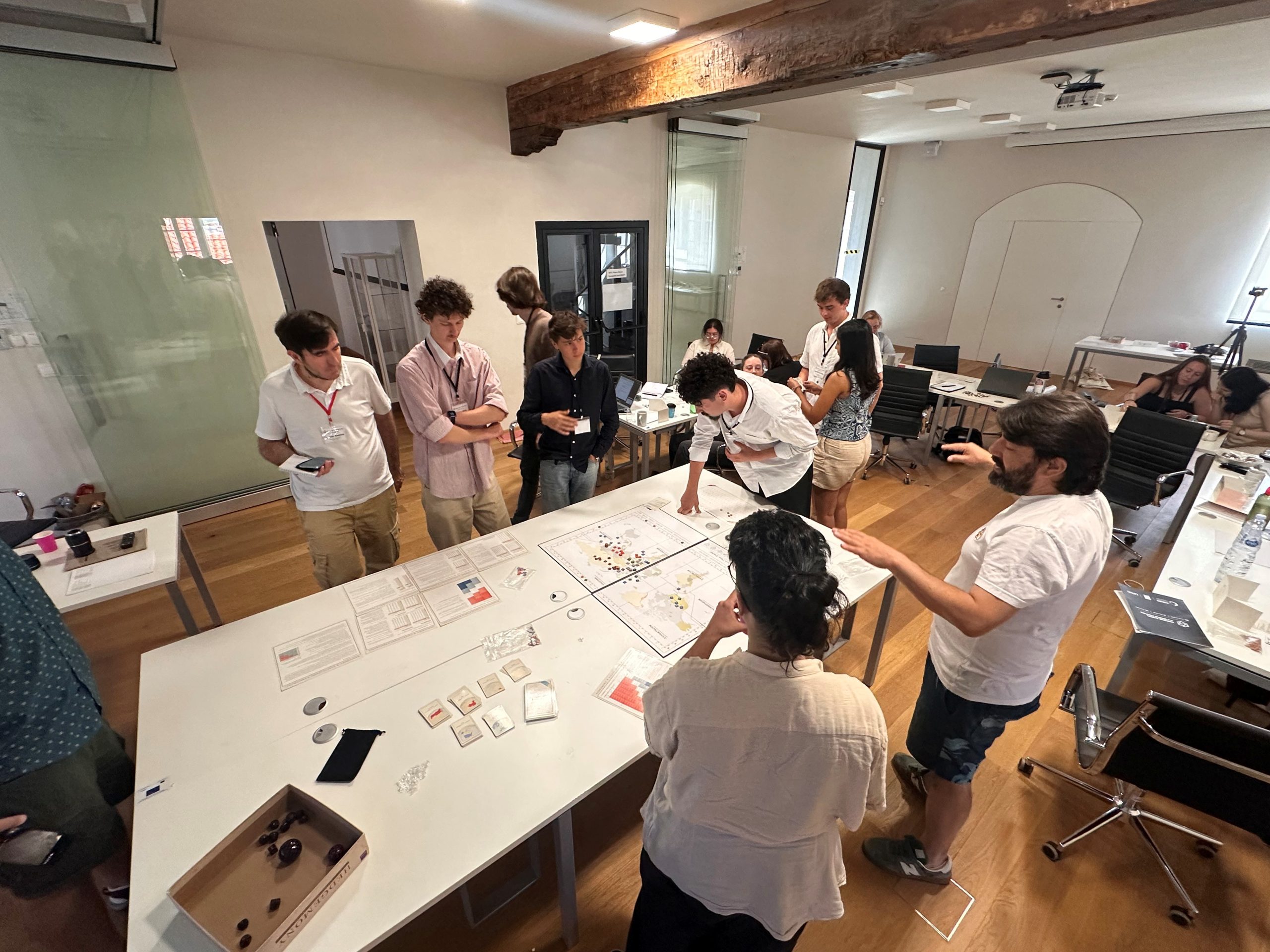
For me, the week was special particularly because I had the opportunity to return to one of the games that I have facilitated several times before: RAND’s Hedgemony: A Game of Strategic Choices. Together with Đorđe Krivokapić, Marko Kovačević and Filip Ejdus, I facilitated another session of the game, working with participants to explore the difficult choices involved in developing a geopolitical strategy under uncertainty. Hedgemony was developed by RAND as a pedagogical wargame for defence-policy professionals. The core problem that it tackles is that decision-makers have to prepare for a range of possible futures while having limited resources and incomplete information about which future will actually materialize. The game therefore places players in situations where they have to balance current demands against longer-term investments, manage competing priorities and anticipate how other actors might respond. Facilitating Hedgemony is always rewarding but doing so in a room full of brilliant people with different academic and professional backgrounds made this session especially interesting. The participants brought their own assumptions about strategy, security and international politics into the game, and seeing those assumptions translated into concrete decisions was a reminder of what makes serious games so valuable. From mind-boggling strategic moves by PRC players to patient albeit conservative, EU players’ moves, the entire session was shining with amazing participants.
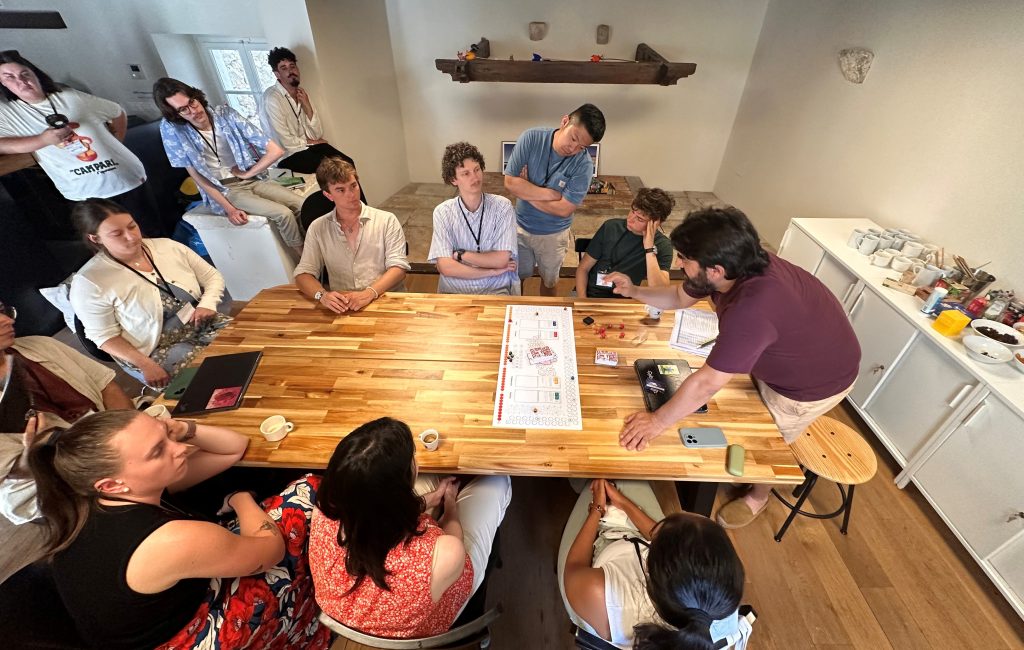
The summer school also gave us an opportunity to try something much newer, albeit far less mature. With the help of Sonja Stojanović Gajić, whose expertise in EU foreign, security and accession policy was invaluable, we tested the first version of StrategEUm, a game developed by the Serious Games Lab at the Centre for International Security (CIS-FPN) as part of the GEO-POWER-EU Horizon Europe project. Unlike Hedgemony, which is a synthetic game with a teaching goal, StrategEUm is, at this stage, still an analytical game, which seeks to provide strategic foresight, and nuances of already present but largely obscured mechanisms shaping the strategic relations between actors. StrategEUm is designed as a strategic-foresight game focused on the geopolitical challenges facing the European Union. Rather than simply asking participants to predict what will happen, the game allows them to explore how different strategic choices can shape possible futures. This was our first opportunity to put an early version of the game in front of an audience outside the immediate design team, making the feedback highly valuable. There is something both exciting and slightly nerve-racking about watching other people play a game that you have helped design: suddenly, every rule, assumption and mechanic is exposed to scrutiny. And that was perhaps one of the most valuable aspects of summer school. Although I came primarily as a facilitator, I also left feeling very much like a student. That feeling, however, was not only due to amazing participants in games.
Throughout the week, I had the opportunity to learn from several impressive approaches to simulations and serious games. During his keynote address, Professor Dakota Rudesill presented the National Security Simulation, an ambitious student-practitioner exercise that brings participants together to simulate emerging national-security scenarios. Seeing how such a large simulation can bring practitioners into the classroom was particularly inspiring. Meanwhile, Dr. Laurie Georges presented an engaging simulation focused on escalation dynamics and nuclearization. I found the potential of this kind of simulation notably interesting because it opens possibilities for using games not only as teaching tools, but also as a way of exploring decision-making and potentially being utilized as proxy for decision-making variable testing in quasi-experimental research. From a different angle, Professor Markus Bresinsky from OTH Regensburg introduced us to an interesting tool called EMPAMOS and its use for understanding and strengthening the motivational dimensions of games. This was a useful reminder that designing a serious game is not simply a matter of creating interesting rules, but also about how they interact and the present inherent risks. The way participants become immersed in the game, understand their roles and interact with the structure of the simulation can be just as important as the substantive scenario itself. In general, learning of new simulations, methods, and meta-approaches have provided me with valuable knowledge and challenges to my existing approaches.
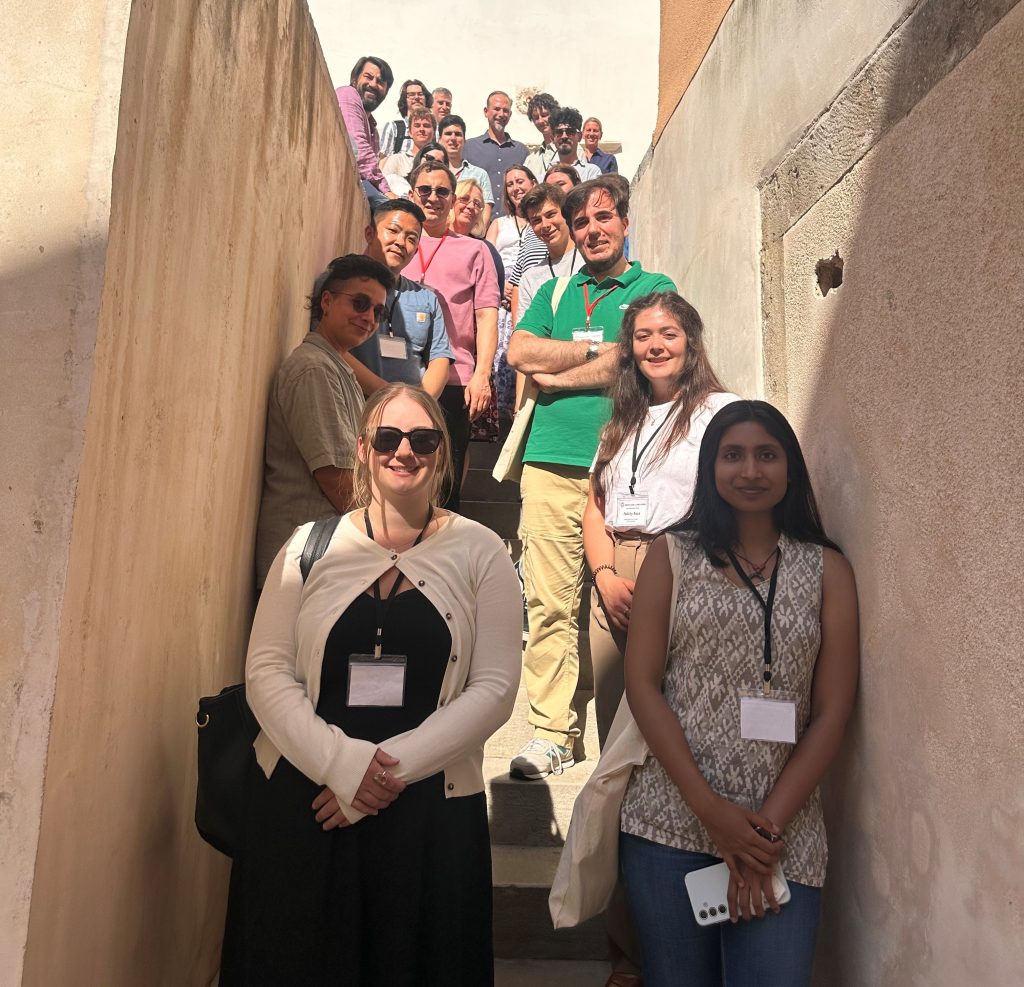
The participants made the experience even more rewarding. The summer school brought together Master’s students from the International Master in Security, Intelligence & Strategic Studies (IMSISS), PhD students and candidates from The Ohio State University, as well as researchers and practitioners working on security and international politics. Their willingness to question assumptions, think creatively and challenge one another produced some genuinely interesting discussions. For our Serious Games Lab, their feedback was particularly useful. Serious-game design is inherently iterative: a game can look perfectly coherent on paper and behave very differently once real players start making decisions. Watching participants interact with both Hedgemony and the first version of StrategEUm therefore provided us with ideas that will hopefully make our future games better.
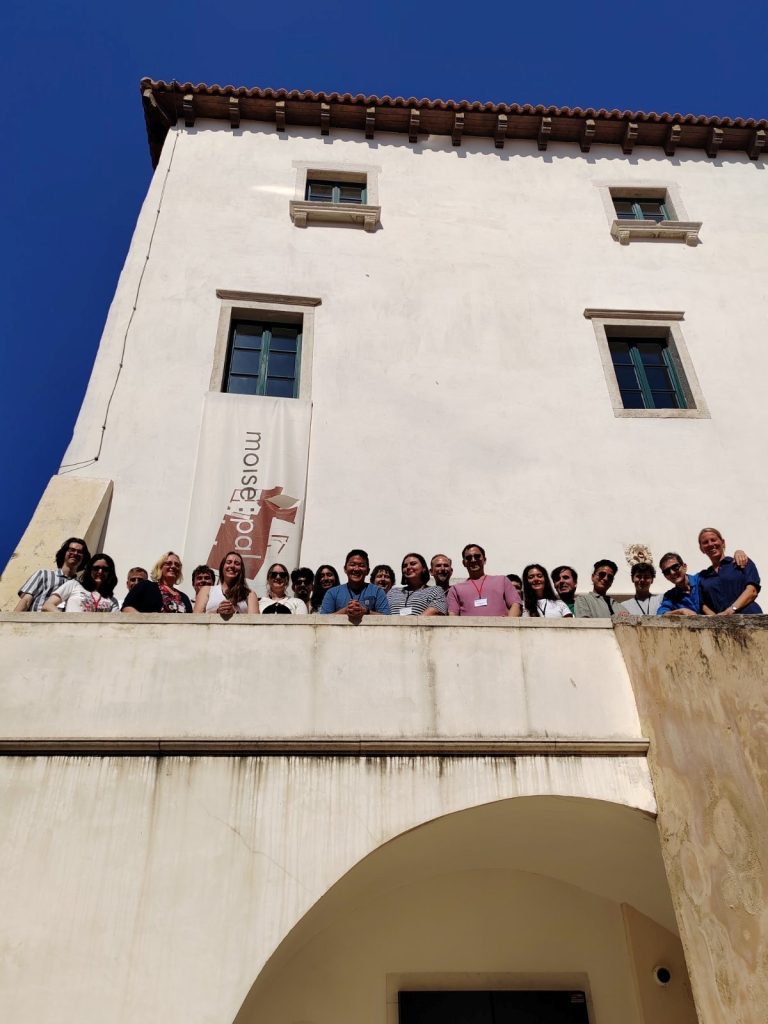
The setting itself added something difficult to reproduce elsewhere. Cres is the largest town on the largest Croatian island of the same name, situated around a sheltered bay in the northern Adriatic. Its old town is characterized by narrow streets and medieval architecture, while the island’s history reflects the many political and cultural worlds that have shaped the eastern Adriatic, including Roman, Venetian, Austro-Hungarian, Italian and Yugoslav periods, as well as the pre-classical history, that Đorđe Krivokapić was kind to introduce to us. Our sessions took place in the Moise Palace, a roughly 500-year-old Renaissance patrician townhouse in the centre of Cres and a registered cultural heritage site of the Republic of Croatia. There was something fitting about spending the day discussing geopolitical strategy, deterrence, escalation and European security inside a centuries-old Adriatic palace and then being able to walk a few minutes and find yourself by the sea.
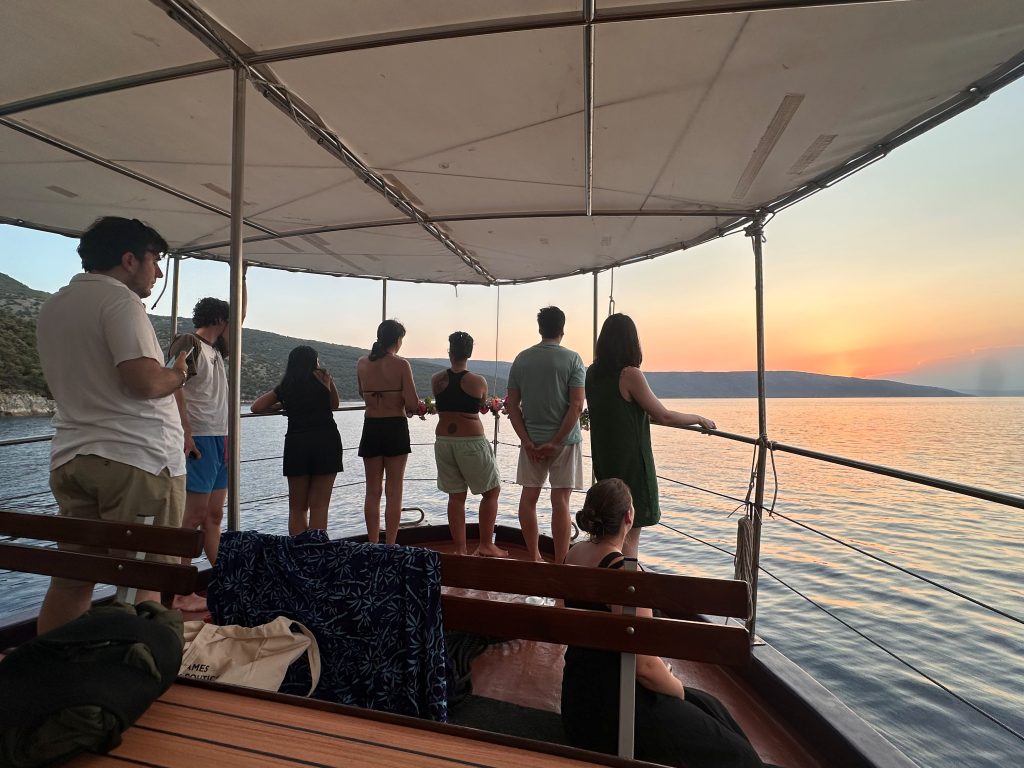
The island also provided an unusually good environment for the less formal side of an academic summer school. Conversations continued over coffee, dinner and walks through the old town. The beaches were close enough to provide while the relaxed atmosphere of Cres made it remarkably easy for people from different institutions and countries to get to know one another. Numerous taverns allowed people to socialize, while beaches provided opportunities for mutual activities, as well as an easy escape after a long session, The week ended with a boat-based farewell dinner. We enjoyed a boat ride to a completely remote beach, where we spent hours swimming, eating and enjoying each other’s time. Appropriately enough, dolphins have shown up as we were about to leave, providing us with a lovely final chapter.
Looking back, what I will remember most is not any individual session, but the combination of designing, facilitating and playing. Serious games sit somewhere between research, teaching and experiential learning, and the summer school demonstrated just how much can happen in that space. I came to Cres to facilitate games that I already knew well and to test one that was still very much in development. I left having learned new ways of thinking about simulations, new ideas for our own games, and, perhaps most importantly, having met a group of wonderful people who made the entire experience memorable. From swimming with Felicity and Aron, to talking about anime with Erik, having long IR talks with Marko while convincing him to go to the beach, night-trampoline-diving with Ryo and trying to go through Cres’ narrowest streets with Cameron, this summer school has provided me with an astonishing experience. For the CIS-FPN Serious Games Lab, the summer school was an opportunity to share what we have been developing, but also to listen, experiment and learn. I am very grateful to everyone who contributed to making it such an enjoyable and intellectually stimulating week.
Milan Varda is a Research Assistant and PhD Candidate at the University of Belgrade – Faculty of Political Science. He is also a member of the Serious Game Lab at the Centre for International Security.
Image credits: Serious Games Lab