

by ALEKSANDRA VUŠUROVIĆ
Over the past two decades, contemporary security discourses have increasingly been shaped and mediated by audiovisual media and cultural imaginary. As cinematic representations of conflict have been powerful ever since the earliest encounters of film and war more than a century ago, like that in the 1911 Italian invasion of Libya (Falcucci and Mancosu, 2025; IDFA, n.d.), the study of international politics and security through film have attracted significant scholarly attention in IR and CSS literature (Buzan, 2010; Campbell, 2022; Carter & Dodds, 2014; Daniel & Musgrave, 2017; Heck, 2017; Shapiro, 2009; Van Munster & Sylvest, 2015; Weber, 2006). The film interest is particularly notable within the scholarship associated with the “visual” and “aesthetic” turns in IR and the more pluralist methodological approach that incorporates images, visual media, bodily/sensorial, artistic, and affective experiences in the study of international politics (Betti et al., 2025; Bleiker, 2018; Callahan, 2015, 2020).
The genre of feature-length documentary is particularly relevant for IR engagement with film for several reasons. The overall growing presence and influence of documentary format in today’s media environment is also reflected in the wide theatrical, TV and online circulation of highly profiled feature documentaries revolving around the central issues of international affairs (Van Munster & Sylvest, 2013). In these documentaries, dramatic narration weaves live footage and other first-order representations of historic as well as more recent issues in international politics into intricate accounts of events and the people involved, therefore contributing to the public discourse in which these events are being interpreted and their meaning negotiated (Heck, 2017). In assessing the genre-specific characteristics of documentaries as second-order representations and independent sources of IR knowledge, Van Munster and Sylvest argue that they should be understood as “a particular arrangement that creatively brings into play the boundaries between fiction and fact, entertainment and education, or data and theory” (2013, p. 2). The diverse human perspectives and the auteur-driven approach that are central to feature documentaries allow scholars a deeper immersion and insight into the events and related abstract concepts, and often stimulate greater awareness of the affective and emotional dynamics that underpin political affairs. At the same time, with more factual accuracy and responsibility to truth and reality than fictional cinema, documentaries can directly intervene in international politics and contribute to the exercise of agency in international affairs. This influence becomes particularly salient when films are showcased at major international film festivals, which have become important visibility platforms for the ongoing debates on pertinent matters of international politics and security.
As a cinematic reflection of the increasingly volatile and unstable global environment, regional security themes have been strongly represented in international feature documentaries in the past two years. The curated selection of 10 films presented below is based on several criteria: production year (2024 or 2025); premieres, screenings and awards at “A-list” and other major international film festivals worldwide (including Cannes, Venice, Berlinale, Sundance, CPH: DOX, IDFA, Visions du Réel, Locarno, Tribeca, Toronto, Hot Docs, etc.); the relative extent of media coverage and public debate they generated; the regional and sectoral diversity of security issues addressed; and additional insights gathered through interviews with film professionals, journalists, scholars and diplomats with access to recent documentary releases.
No Other Land (2024)
The Oscar-winning documentary by a Palestinian-Israeli collective documents the systematic destruction of Palestinian villages in the Masafer Yatta area of the occupied West Bank. Made in alliance with the Palestinian activist Basel Adra and the Israeli journalist Yuval Abraham, the film chronicles power asymmetry, local resistance, and everyday life under military occupation in a down-to-earth, unsensationalized manner. No Other Land is a harrowing document, a political testimony and activist cinema in its true sense, which shows how documentary films can actively inform public opinion and intervene directly in global debates on matters of territorial control, international law and human rights.
2000 Meters to Andriivka (2025)
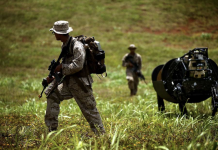
The new documentary by the Oscar-winning director of “20 Days in Mariupol”, Mstyslav Chernov, follows a Ukrainian platoon during the 2023 counteroffensive on a mission of liberating a strategically important village. Following the advance of the Ukrainian soldiers through the two kilometres of a heavily fortified strip of forest towards Andriivka, the director combines frontline footage with intimate soldiers’ reflections in a stunning and devastating portrayal of the realities of trench war and the human costs of modern warfare. The film offers a unique ground-level perspective on a military conflict that redefines European security and the global geopolitical order.
Soundtrack to a Coup d’État (2024)
In this well-researched and richly illustrated film essay, Belgian filmmaker Johan Grimonprez delivers an extraordinary exploration of a forgotten episode of the Cold War following the 1961 assassination of the Congo’s leader Patrice Lumumba. The film links historical and intelligence records of superpowers’ meddling in postcolonial Africa to the cultural politics of jazz diplomacy, as the United States send jazz ambassador Louis Armstrong to Congo to deflect attention from the CIA’s role behind a coup. The result is a compelling and resonant story about global power struggle over influence, colonial accountability and the reach of culture as a vehicle of covert control.
Khartoum (2025)
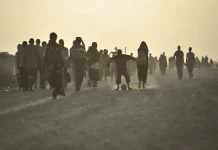
The filming of Khartoum, directed by four Sudanese filmmakers, began with documenting the lives of five city residents who were later caught in the turmoil of the Sudanese civil war (2023-nowadays). With remarkable sensitivity and immersion into the experiences of its protagonists, the documentary follows them in the quest for their dreams, freedom and survival as they navigate the chaos of a war-torn country, displacement and the scale of trauma inflicted by the violence. It also gives an outline of the massive regional security crisis caused by Sudan’s state collapse and its implications for the Horn of Africa and the Red Sea.
The Helsinki Effect (2025)
This gently satirical yet deeply insightful documentary by Arthur Franck focuses on the diplomatic process behind the Conference on Security and Cooperation in Europe (CSCE), which remarkably gathered world leaders from East and West at the Helsinki summit in 1975. Seen as a key element of the Cold War détente at the time and the starting point for the gradual collapse of the communist authoritarian rule in Eastern Europe, this tedious process had a major impact on solidifying post-war principles of democracy, human rights and security and the subsequent establishment of the OSCE. The historical perspective of the film provides valuable material for a debate on the present and future of peacebuilding and global governance in the times of rapidly eroding multilateralism.
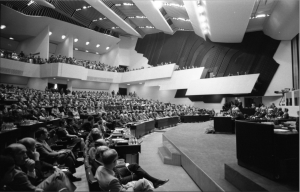 Opening of the Conference on Security and Cooperation in Europe (CSCE), Finlandia Hall, Helsinki, 30 July 1975
The Last Ambassador (2025)
Directed by Natalie Halla, the film chronicles the profound resistance of Manizha Bakhtari, the Afghan ambassador in Vienna and the country’s only female ambassador at the moment of the country’s Taliban takeover in 2021. It examines Bakhtari’s diplomatic role and advocacy for the rights of Afghan women and girls while in exile and a refusal to represent the internationally unrecognised Taliban-led government, despite increasingly difficult personal and political circumstances. The Last Ambassador is a film strongly informed by human rights, which also makes a strong case for the increased global attention to the growing instability in the country and its regional spillover effects.
Facing War (2025)
With unprecedented access to NATO’s key alliance leadership, Facing War takes viewers into the final year in office of Secretary General Jens Stoltenberg. Offering a rare glimpse into high-stakes diplomacy and inner power struggles amidst a major crisis caused by the Russian invasion of Ukraine, the film already feels like history at times in the era of heightened transatlantic tension and mistrust. It tells an important story about the delicate art of keeping the alliance together at a critical moment of modern history, posing a threat to international security and rules-based order.
Orwell: 2+2=5 (2025)
In his sharp new documentary, Raoul Peck embarks on the exploration of the visionary impact of George Orwell’s “1984” through the analysis of modern-day global rise of the far-right, government violence, information warfare and surveillance that have become eerily resemblant of the Orwellian fictional totalitarian world. With a significant focus on the current US President Donald Trump, the film evokes dystopian parallels to his cult of personality, the disregard for the truth and the willingness to undermine the rule of law, and raises questions about the transnational threats that fusion of ideology, technology, and media ecosystems pose in the post-unipolar world.
Under the Flags, The Sun (2025)
Documentary film directed by Juanjo Pereira is a striking journey through the recovered international audiovisual archives that reveal the hidden mechanisms of power behind a 35-year dictatorship of Alfredo Stroessner in Paraguay. Through an extensive exploration of the 20th century media, the film reveals how it was masterfully manipulated by the regime for the construction of the national identity and sustaining itself by exploiting domestic indoctrination and Cold War alliances, and its lasting impact on a nation still influenced by its authoritarian past.
The White House Effect (2024)
This elaborate documentary, told through meticulously curated archival footage, investigates the pivotal moment in the history of the climate crisis, when a political battle in the George H.W. Bush administration (1988-1992) changed the course of history from addressing to disputing the climate crisis and deliberately undermined the opportunity to take real action on global warming. The film examines the influence of domestic politics and fossil fuel interests on the crucial role that the U.S. government played in the early years of international climate negotiations, and the rise of climate change as one of the central issues in the 21st-century security agenda.
References
2000 Meters to Andriivka. (2025). Home. https://www.2000meterstoandriivka.com/
Beldocs International Documentary Film Festival. (2024). Soundtrack to a Coup d’État. https://www.beldocs.rs/en/product/saundtrek-za-prevrat-2/
Berlin International Film Festival. (2025). Under the Flags, the Sun. https://www.berlinale.de/en/2025/programme/202505390.html
Berlin International Film Festival. (2024). No Other Land. https://www.berlinale.de/en/2024/programme/202409761.html
Betti, A., Biderbost, P. N., & Vaquero Lafuente, E. (2025). Visual thinking through movies and documentaries: Assessing students’ learning and satisfaction in an international relations class. Journal of International Studies, 21(2), 87-106. ttps://doi.org/10.32890/jis2025.21.2.5
Bleiker, R. (Ed.). (2018). Visual global politics. Taylor & Francis.
Buzan, B. (2010). America in space: The international relations of Star Trek and Battlestar Galactica. Millennium Journal of International Studies, 39(1), 175-180. https://doi.org/10.1177/03058298 10371016
Callahan, W. A. (2020). Sensible politics: Visualizing international relations. Oxford University Press.
Callahan, W. A. (2015). The Visual Turn in IR: Documentary Filmmaking as a Critical Method. Millennium: Journal of International Studies, 43(3), 891-910. https://doi.org/10.1177/0305829815578767
Campbell, J. R. (2022). Politics go to the movies: International relations and politics in Genre films and television. Lexington Books.
Carter, S. & Dodds, K. (2014). International politics and film: Space, vision, power. Columbia University Press.
CPH:DOX. (2025). The Helsinki Effect. https://cphdox.dk/film/the-helsinki-effect/
CPH:DOX. (2025). The Last Ambassador. https://cphdox.dk/film/the-last-ambassador/
Daniel, J. F. & Musgrave, P. (2017). Synthetic experiences: How popular culture matters for images of international relations. International Studies Quarterly, 61, 503-516. https://doi.org/10.1093/ isq/sqx053
DC/DOX Documentary Film Festival. (2025). Facing War. https://dcdoxfest.com/films/facing-war/
Falcucci, B., & Mancosu, G. (2025). The Safari and the Screen: How Visual Technologies Shaped Italian Colonial Narratives. Technology and Culture 66(1), 71-105. https://dx.doi.org/10.1353/tech.2025.a951051.
James, P. (2019). Systemist international relations. International Studies Quarterly, 63(4), 781-804. https://doi.org/10.1093/isq/sqz086
Heck, A. (2017). Analyzing Docudramas in International Relations: Narratives in the Film A Murderous Decision. International Studies Perspectives, 18(4), 365-390. https://doi.org/10.1093/isp/ekw012
International Documentary Film Festival Amsterdam (IDFA). (n.d.). War and Peace. https://festival.idfa.nl/en/film/7d05e1a1-bbd2-4b18-bb1c-9a810af30c37/war-and-peace/
Khartoum Movie. (2025). The story. https://www.khartoummovie.com/the-story
Shapiro, M. (2009). Cinematic geopolitics. Routledge.
The White House Effect. (2024). About. https://www.thewhitehouseeffect.com/about
Toronto International Film Festival. (2025). Orwell: 2+2=5. https://tiff.net/events/orwell-2-2-5
Van Munster, R., & Sylvest, C. (2015). Documenting world politics: A critical companion to IR and non-fiction film. Routledge.
Van Munster, R., & Sylvest, C. (2013). Documenting international relations: Documentary film and the creative arrangement of perceptibility. International Studies Perspectives, 1-17.
Weber, C. (2006). Imagining America at war: Morality, politics, and film. Routledge.
Aleksandra Vušurović is an MA student in Peace, Security and Development at the University of Belgrade, Faculty of Political Science, and RSKH intern at the Centre for International Security.