
by ALEKSANDAR JAKOVLJEVIĆ
“Never again shall we be visited with the horrors of war through the action of government”, declares the Constitution of Japan in its very first sentence.
This sentence is not just an opening of their constitution, but it also represents the morale of the Japanese, and I witnessed it firsthand. In February 2026, I was a part of MIRAI 2025 Visiting Japan program, with my group focused on Peacebuilding. MIRAI is a program organized by the Ministry of Foreign Affairs of Japan, Japan International Cooperation Center (JICE) and Regional Youth Cooperation Office (RYCO). JICE’s role is to strengthen the role of private sector in activities related to educational and cultural programs, while RYCO is a non-governmental organization with offices in all of Western Balkans. Those two provide an example of how non-formal education can have a role in peacebuilding.
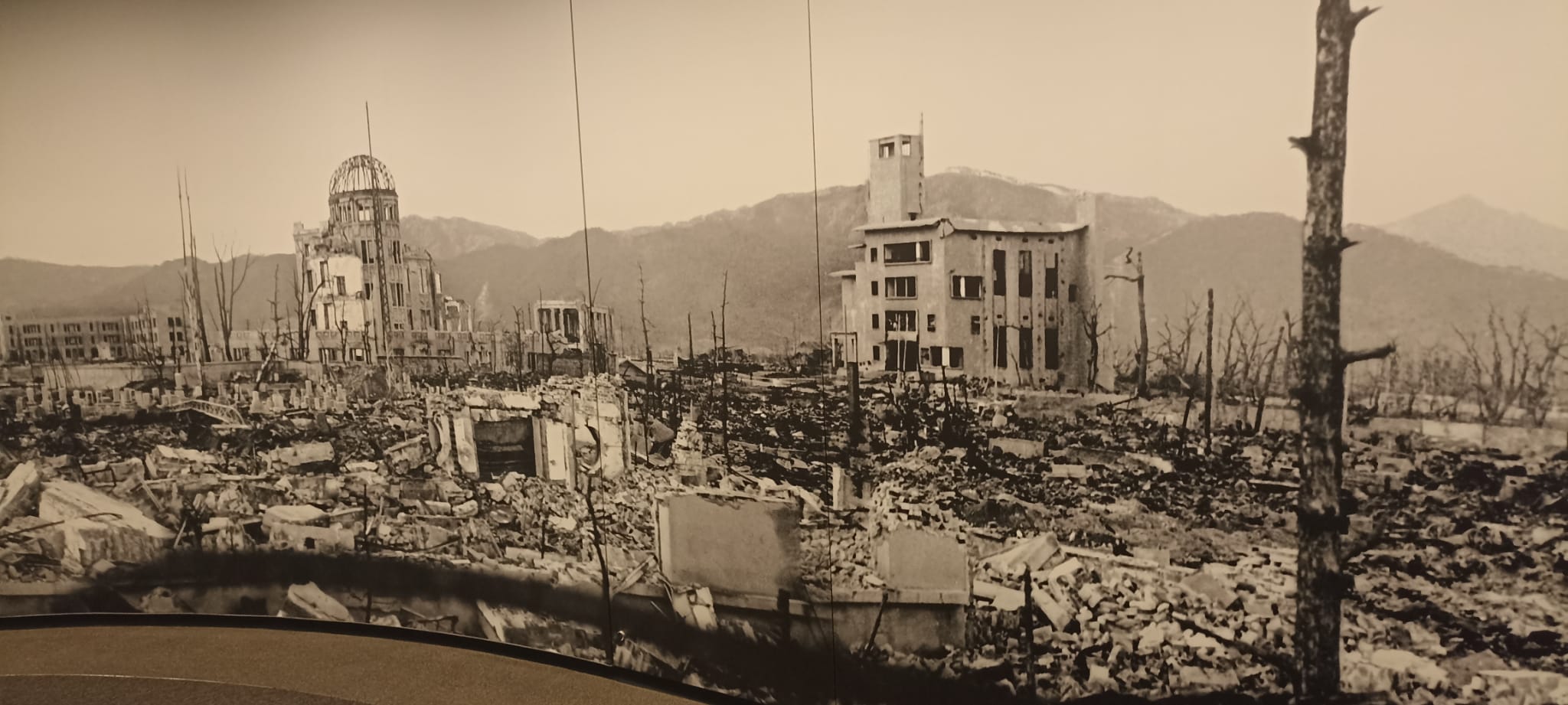
During my trip, I experienced many faces of Japan which coexist in its modern society, each rich in its own way. In Miyajima and Senso-ji, I saw the traditional side with Buddhist shrines, rituals and customs, while Tokyo’s Shibuya and Akihabara presented the futurist and dynamic side together with Japan’s unique popular culture. Hiroshima, however, offered a different perspective. It helped me understand how the atomic bombing shaped Japan and the way it is now deeply woven into its contemporary identity. Tour in the Hiroshima Peace Memorial Park, including the visit to the Hiroshima Peace Memorial Museum inside the Park, was emotional and eye-opening to how the Japanese society handles this traumatic experience without fostering hatred and lasting animosity towards the United States. That seemed impossible for me, coming from a post-conflict area where resentment is still present, and I wondered which methods Japan used to accomplish this. One of the key elements in that is so-called “Peace Education”.
Peace Education implies reconciliation and peace-building through educating younger generations about such values. Confucian philosophy is one of the crucial cultural elements that formed Japanese peace politics and influenced peace education. Confucianism puts an emphasis on education as one of the core pillars of society. It is meant to provide moral teachings and be the foundation of a social order. In Japan, this legacy remains present in the high value placed on education and indirectly shaped the integration of peace-oriented norms within the school system after trauma from the Second World War. Those norms can be achieved through the promotion of democracy, inclusion, and visits to historical frontlines in order to better understand those events. This is especially important in societies where kids can be exposed to conflict, as hatred and negative stereotypes are often inherited through families and upbringing. One of methods is to teach students about other, similar cases of reconciliation that are from a totally different region.
Informal education has a very important role in this process. The state and its policies can change our perspectives on certain things. That is where interpretation of contemporary historical issues can suffer the most. It becomes a tool in nation-building that often minimizes past crimes, which is negative for a broader reconciliation process. For this reason, peace education must not be limited only to school and university lessons. Those holes made by state policies (which are frequently deliberate) should be filled by civil society, artists, and media.
It is important to understand that reconciliation processes are difficult and do not have a universal approach to every society and conflict. Japan and the US have a complex postwar relation, from US bases to economic cooperation. However, there is one method which really stood out to me as something that can have universal implementation, helped by informal education. Professor Taro Komatsu of Sophia University in Tokyo, whose lecture I attended, spoke about this approach. He emphasized the significance of human casualties and pain as consequences of war. Instead of pointing fingers and feeding animosities, war suffering becomes the focus in education. This criticizes hatred and need for vengeance against the enemy, as it would only lead to a downward spiral. The goal is “received” suffering as an anti-war method.
The aforementioned Hiroshima Peace Memorial Park is in its entirety dedicated in its criticism of war through preserving memory of those who were killed, while not promoting hatred towards the perpetrators. Perceiving all casualties as victims of war horrors, no matter the side they fought on, is another key element of this. An example of that is The Cornerstone of Peace, a monument in Itoman, which lists the names of over 240 thousand killed people in the Battle of Okinawa. It includes the names of killed foreign solders, including Americans. There is no relativity in the cost of human life, and this approach is integrated into the peace education. Another way to raise awareness of war brutality is through art. Many Japanese films have an important role in that, such as Kaneto Shindo’s Children of Hiroshima, Masaki Kobayashi’s The Human Condition trilogy, or Studio Ghibli’s animated film Grave of the Fireflies, by Isao Takahata. Even the infamous Godzilla originated as a metaphor for atomic bombs, with its radioactive destruction of cities a direct allegory of nuclear war.
Differences between Japan-US relations and Serbia’s relations with its neighbors make it impossible to just copy-paste the same model of peace education. However, certain methods can be implemented. For example, the method of students learning about other conflicts can result in a positive outcome. The “received” suffering through informal education can also be effective, especially given the fact that Serbia’s film industry already produced many anti-war films. However, there is also room for improvement in formal education when it comes to emphasis on costs of war. The role of civil society is significant when it comes to peacebuilding, since engagement of different individuals can help promote peace. RYCO presents a positive example, thanks to which I got the opportunity to experience peace education. Such experiences can really challenge us and change our perspectives on the feasibility of peacebuilding.
Aleksandar Jakovljević is an MA student at the University of Belgrade, Faculty of Political Science.
Image credits: author’s archive